IMBA White Paper: National Park Service Should Change Regulations for Opening Trails to Bicycling
The National Park Service (NPS) should streamline its rules so that park superintendents can more easily open trails to bicycles on the land they manage. Currently, the process is needlessly lengthy and duplicative, requiring years of paperwork, review and written approval (twice, in fact) from the NPS Director and Assistant Secretary of Fish Wildlife and Parks.
This current burdensome process acts as a disincentive for parks to properly document their trails. An outdated regulation, 36 CFR 4.30(b), was incorporated in the early 1980s and doesn't reflect current best practices for mountain bike management. It is also not consistent with the manner in which other federal public land agencies manage trail access. Therefore, IMBA has requested a change in the process.
Suggested Rule Change Will Aid Parks
Currently, about 20 national parks offer mountain biking on narrow dirt trails and another 20 allow riding on dirt roads. Park units with mountain biking on trails are required to go through a convoluted special regulations process, while access to dirt roads can be granted more easily.
Park superintendents should be given better tools for opening trails to bicycling. Bicyclists should be treated like other non-motorized trail users, such as equestrians. The National Park Service and Department of Interior should eliminate special regulations rule 36 CFR 4.30(b). The special regulations process that restricts bicycling on trails is unduly burdensome and duplicates protections that are already embodied by the NPS General Management Plan and the National Environmental Policy Act.
What A Rule Change Will and Won't Do
- A rule change will not diminish protections that ensure appropriate trail use. All regular NPS regulations, General Management Planning (GMP) processes, and the National Environmental Policy Act (NEPA) still applies. Absolutely no environmental processes will be shortchanged. The public will still have ample opportunity to comment both locally and nationally. The parks that have existing mountain biking have gone through the GMP and NEPA processes and the trails are signed, actively managed and documented in the superintendent's compendium.
- The proposed rule requires NEPA compliance through, at a minimum, an Environmental Assessment (EA), if not an Environmental Impact Assessment (EIS).
- The current system is not working. Most NPS units are unwilling to undertake the time-consuming special regulations process, and thus bicycling opportunities are in this state of limbo and can't be fully embraced. Mountain biking needs to be managed better and the process to incorporate cycling needs to be clear.
- Mountain biking can and does succeed in national parks. Many parks have successfully managed mountain biking for more than a decade on roads and trails. Families and community members have successfully enjoyed these parks on their bikes for years and are not controversial.
- Changing 36 CFR 4.30(b) won't change Wilderness or Wilderness Study Area regulations in any way. Mountain bikes will continue to be banned from these areas.
- NPS units that are not interested in expanding opportunities for bicycling will not be affected. Changing the rule will not force mountain biking on any park unit, and superintendents that do not see opportunities for mountain biking in their parks will not be asked to adopt it.
- The use of special regulations is time-consuming, costly, and duplicative. Special regulations are largely directed at motorized users, such as personal watercraft; motorboats; snowmobiles; ORVs; seaplanes; amphibious aircraft; and commercial fishing, trucking, mining, and aircraft. Once everything is done at the park level it can take-years to emerge from the Washington-based regulatory process.
- In addition to the public hearings and comment involved in an EA or EIS, the rule requires another 30 comment period after it is published in the Federal Register. Before the trail is opened, one final posting is required in the Federal Register, with 30 days for public comment.
- The NPS policy stands in stark contrast with that of the U.S. Forest Service and the Bureau of Land Management, which allow all non-Wilderness trails to be managed as "open unless designated closed." Even with a rule change, NPS policy would remain "closed unless designated open" and would still be a deliberate, public, lengthy multi-year process to open a trail to bicycles.
- Independent scientific studies, including those conducted by the National Park Service, have shown the environmental impacts of mountain biking are similar to those of hiking and far less than other uses.
- Treating mountain bicyclists similarly to equestrians will streamline one rule, not amend all NPS rules.
- Special regulations would still apply if building new trails or opening existing trails is: 1) a significant alteration in the public use pattern of the park area, 2) adversely affects the park's natural, aesthetic, scenic or cultural values, 3) requires a long-term or significant modification in the resource management objectives of the unit, 4) or is of a highly controversial nature (36 CFR, Chapter 1, Part 1, Section 1.5).
Bicycling is an NPS Solution
Expanded opportunities for mountain biking will benefit national parks in many ways.
Aid Visitor Enjoyment: Parks are better experienced on foot and by bicycle than from inside cars and RVs. Bicycling broadens the recreational offerings and helps Americans get exercise. It connects people with the natural world and is a fun, low-impact activity.
Add Relevancy for Youth: Many parks lack relevance with today's youth bicycling is a great way to help kids fall in love with parks and become future stewards. According to the Outdoor Industry Foundation, bicycling is the number one gateway activity that gets kids outside and ultimately interested in other activities such as hiking, camping, and fishing. Kids don't fall in love with the outdoors at a visitor center or information kiosk, they want to explore and have fun.
Improve Visitation: Visitation numbers are down at many NPS units. Improving opportunities for bicycling and promoting trails tourism could benefit economic conditions for nearby communities.
Added Value: Creating opportunities for mountain biking will not diminish experiences for existing users such as hikers or equestrians. Park staff are skilled at selecting appropriate trails for shared-use experiences. Shared-use trails work and there are hundreds of success stories around the country, many on NPS land, that show hikers, bicyclists, and equestrians can all get along.
Create Signature Projects: Congress funded 100 NPS signature projects have been identified in the first year of the Centennial Initiative, including some that would improve conditions for biking, hiking, and equestrian use. Cyclists will continue to ask Congress for more resources for national parks.
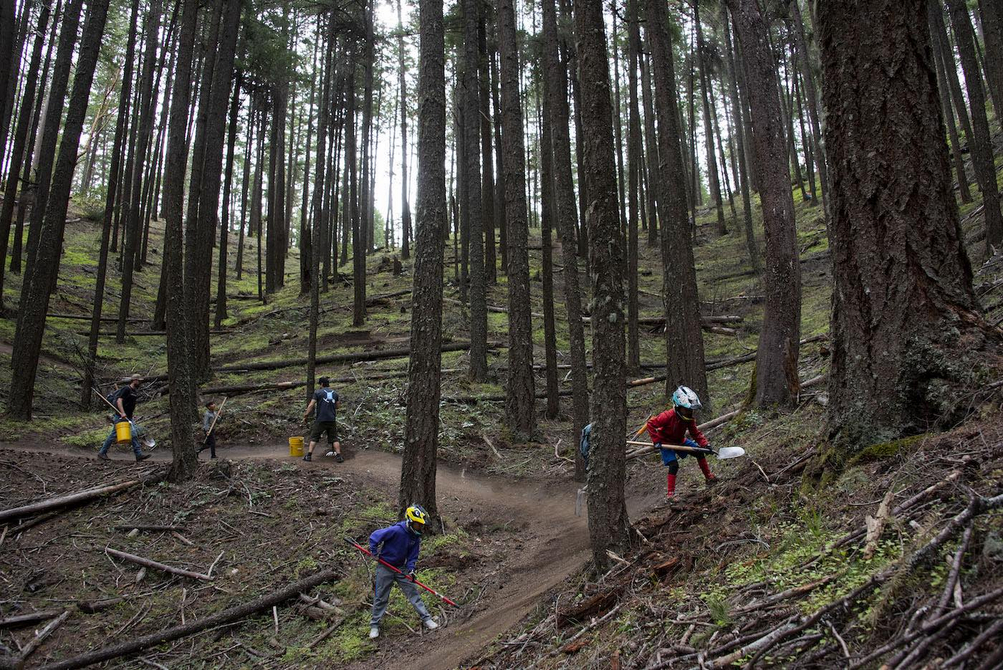
Create New Volunteers: Many NPS trails are in disrepair. Annually, mountain bicyclists conduct almost one million hours of trailwork on public lands. Volunteers from the mountain bike community could help build environmentally sound, sustainable trails.